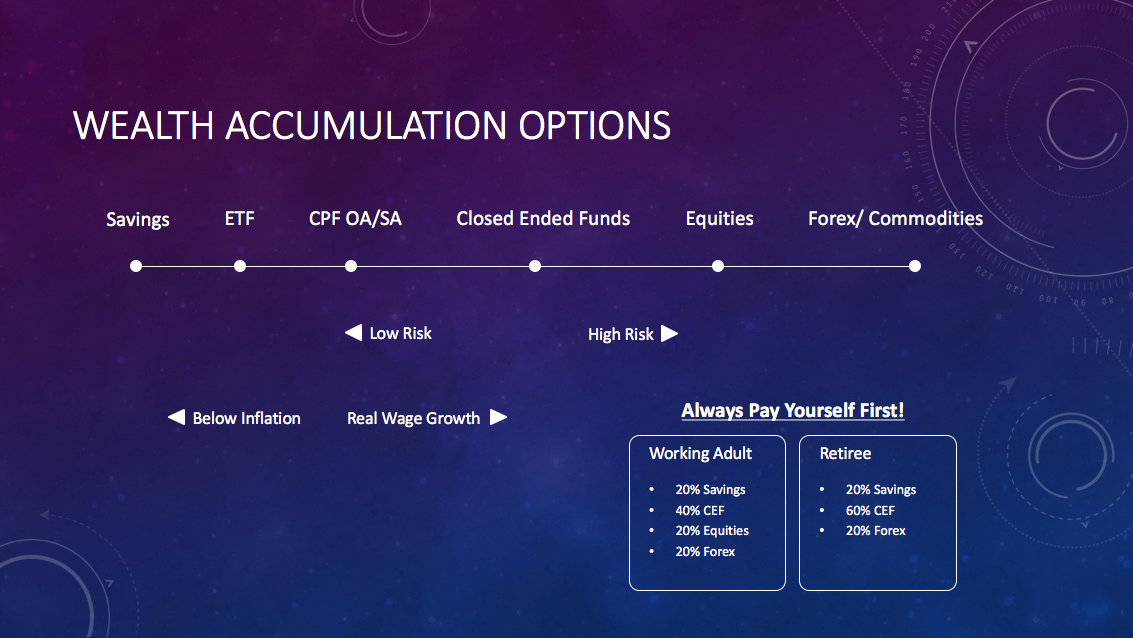
I'm sorry I have not been blogging for a while. The market has been very volatile in March with FOMC (Federal Open Market Committee) meetings, Europe's geo-political changes and of course Trump.
Earlier this month, I also attended a formal forex trading which opened my eyes and corrected many of my earlier trading bad habits. I would highly encourage anyone keen on forex trading to attend. The fee may seemed like a challenge but you'll make it back in one or more trades. My teacher is Jack Zhang - a very experienced trader and you can find his website here (http://harmonicasia.com)
In this and subsequent posts, I will try to impart what I know and my experiences with forex trading; starting with the very basic so you can get yourself started towards gaining financial independence.
So, without further ado, let's start!
What is Forex
Forex or Foreign Exchange is the trading of currency rate fluctuations between currency pairs. Currency pairs are grouped in to majors, minors, exotic, metals and commodities; majority are traded against USD as the base currency.
Examples of currency pairs are
💡 Like stocks, you need to be familiar and keep yourself current on what you are trading. As such, it is not advisable to be trading in more than 3 forex pairs for a start.
How do I start?
Forex is traded through CFD (contract for differences). CFD is a derivative in which you do not own the underlying asset. As such, it gives you the flexibility to buy or sell a product without needing the capital to own it first. On the flip side, it also makes it more risky.
Step 1 - Create a demo account and get used to some paper trading before you jump in with real money. I would recommend using IC Market as they are reputable and have the lowest spread amongst the brokers I have tried.
Step 2 - Create a account with TradingView. This is where you can get really good trading ideas and use their chart tool to plan your trade.
Right, you're set.
Forex Trading Basics
Q: How much do I need to start?
It can be as low as $2,000. There are many students in my class who are using forex to pay for their study loan. A larger deposit will enable to trade in larger quantity. The rule is simple - deposit what you are willing to lose.
Q: What is balance, equity and margin?
As you are trading CFD, you are using margin to buy those contracts. Contracts are typically traded in lots; 1 lot usually equates to 100,000 contracts and you can trade 0.01 lot or 10 lots.
Every currency pair has different value per contract. One you lock in a trade, that amount is calculated as your margin requirement and will not change while you are holding the contract.
Equity is how much your account is worth as the exchange rate goes up or down. In simpler term, it is your balance at the point in time if you close all your open trades.
Dividing your equity over your margin gives you the margin level in percentages. This is probably to most important indicator you need to take note of and keep as high as possible. Once your margin gets below 100%, you will no longer be able to execute new orders; and when it goes below 50%, your trades will be closed automatically, realising whatever loses you have.
💡A simple rule is that you should trade a maximum of 2 lots per $10,000 deposit.
Q: Do I have to own the asset before I can sell them and can I be buying and selling the same currency pair simultaneously?
No. In forex, because you are not buying the underlying asset but the direction and magnitude of rate change, you can choose to buy (long) or sell (short) the asset. There are different school of thoughts to hedging. My view is that you should avoid hedging and unless necessary; and if you plan your trade, you would not need to hedge.
Try Out
Before we go into the really understand how to trade. Let's try some basic trading.
1. Install MT4 trader on your laptop and launch it. For a start, let's focus on one chart and close all others. If you do not have USDJPY as your chart, simply find the pair in the Market Watch window and drag the pair into the active window.
2. Right-click on your chart and enable 'One-click Trading'. You should have something like this.
3. Finally, locate the 3rd icon from your right on your menu list and add the following indicators
You should see something like this..

The last step for the try out. Do one of the following;
Earlier this month, I also attended a formal forex trading which opened my eyes and corrected many of my earlier trading bad habits. I would highly encourage anyone keen on forex trading to attend. The fee may seemed like a challenge but you'll make it back in one or more trades. My teacher is Jack Zhang - a very experienced trader and you can find his website here (http://harmonicasia.com)
In this and subsequent posts, I will try to impart what I know and my experiences with forex trading; starting with the very basic so you can get yourself started towards gaining financial independence.
So, without further ado, let's start!
What is Forex
Forex or Foreign Exchange is the trading of currency rate fluctuations between currency pairs. Currency pairs are grouped in to majors, minors, exotic, metals and commodities; majority are traded against USD as the base currency.
Examples of currency pairs are
- Major - AUDUSD, EURUSD
- Minor - EURAUD, USDSGD
- Exotic - USDZAR, USDTHB
- Metals - XAGUSD (Silver), XAUUSD (gold)
- Commodities - Sugar, Oil against USD
💡 Like stocks, you need to be familiar and keep yourself current on what you are trading. As such, it is not advisable to be trading in more than 3 forex pairs for a start.
How do I start?
Forex is traded through CFD (contract for differences). CFD is a derivative in which you do not own the underlying asset. As such, it gives you the flexibility to buy or sell a product without needing the capital to own it first. On the flip side, it also makes it more risky.
Step 1 - Create a demo account and get used to some paper trading before you jump in with real money. I would recommend using IC Market as they are reputable and have the lowest spread amongst the brokers I have tried.
Step 2 - Create a account with TradingView. This is where you can get really good trading ideas and use their chart tool to plan your trade.
Right, you're set.
Forex Trading Basics
Q: How much do I need to start?
It can be as low as $2,000. There are many students in my class who are using forex to pay for their study loan. A larger deposit will enable to trade in larger quantity. The rule is simple - deposit what you are willing to lose.
Q: What is balance, equity and margin?
As you are trading CFD, you are using margin to buy those contracts. Contracts are typically traded in lots; 1 lot usually equates to 100,000 contracts and you can trade 0.01 lot or 10 lots.
Every currency pair has different value per contract. One you lock in a trade, that amount is calculated as your margin requirement and will not change while you are holding the contract.
Equity is how much your account is worth as the exchange rate goes up or down. In simpler term, it is your balance at the point in time if you close all your open trades.
Dividing your equity over your margin gives you the margin level in percentages. This is probably to most important indicator you need to take note of and keep as high as possible. Once your margin gets below 100%, you will no longer be able to execute new orders; and when it goes below 50%, your trades will be closed automatically, realising whatever loses you have.
💡A simple rule is that you should trade a maximum of 2 lots per $10,000 deposit.
Q: Do I have to own the asset before I can sell them and can I be buying and selling the same currency pair simultaneously?
No. In forex, because you are not buying the underlying asset but the direction and magnitude of rate change, you can choose to buy (long) or sell (short) the asset. There are different school of thoughts to hedging. My view is that you should avoid hedging and unless necessary; and if you plan your trade, you would not need to hedge.
Try Out
Before we go into the really understand how to trade. Let's try some basic trading.
1. Install MT4 trader on your laptop and launch it. For a start, let's focus on one chart and close all others. If you do not have USDJPY as your chart, simply find the pair in the Market Watch window and drag the pair into the active window.
2. Right-click on your chart and enable 'One-click Trading'. You should have something like this.
3. Finally, locate the 3rd icon from your right on your menu list and add the following indicators
- Bollinger Bands
- Stochastic Oscillator
You should see something like this..

The last step for the try out. Do one of the following;
- Green candle touching the top of your band, if the next candle starts red and on your Stoch Oscillator - Red line above Green. Click on the Sell button.
- Red candle touching the bottom of your band, if the next candle starts green and on your Stoch Oscillator - Green line above Red. Click on the Buy button.
Congratulations! You have placed your first trade.
Till my next post, try it out and see if you are making or losing money by the end of the week. It is certainly not so simple but you will appreciate the next few lessons more once you have some experience figuring out trading on your own.
Cheers!
Till my next post, try it out and see if you are making or losing money by the end of the week. It is certainly not so simple but you will appreciate the next few lessons more once you have some experience figuring out trading on your own.
Cheers!